the m8 metadata project. Information about the EXIF metadata in Leica M8 image files. Very interesting, especially because of the information about the estimated aperture - the M8 has the mysterious blue dot for this, which is used to determine the ambient light and then, by comparing it with the TTL measurement, an approximate aperture is derived. I had already wondered why in Lightroom my pictures had meaningful aperture values ...
Archive 18.4.2011 - 2.5.2011
inotify - get your file system supervised. Bookmarked for later - a daemon that automatically triggers scripts on file events. This could be used to implement automatic image imports via upload from Dropbox, for example.
Ettenheim: Awarding of the Small Art Prize: Georg Schramm causes a scandal in the Europa-Park. Well, Georg Schramm is just a cabaret artist with guts and not such a softie like the gentlemen and ladies in the Europa-Park would probably have preferred. But as they say: those who can't handle the heat shouldn't be in the kitchen. You don't invite Georg Schramm for friendly, nice words. He is the personification of anger. And as such, he speaks for many (and I am one of them).
Lake and Castle Garden













Just a series of pictures I took today while walking around the Aasee and to the castle. On May 1st, people usually go on an outing here in the area - and in the city, most outings end up on the meadows around the Aasee (and at the canal, but I wasn't there today), which is why the Aasee then turns into a giant barbecue party.
Handkerchief Tree



I believe I have photographed this tree almost every year in its bloom. But this time I was there quite early in the bloom, so the petals still look really beautiful. The handkerchief tree is in the Botanical Garden. The photos were taken with the Leica M8 and the C-Biogon 2.8/35.
UNO III Streetbike at Firebox.com. Transformers are here! We live in the future! I already have trouble imagining sitting on a motorized two-wheeler, so I'd rather say thank you and pass on such a vehicle - but it looks cool.
Nubrella.com. Ok, looks weird, but could be really interesting for some situations. As often as I've seen people in Münster riding bikes with umbrellas in the wind, something like this would actually improve traffic safety.
PyPy Status Blog: PyPy 1.5 Released: Catching Up. Yay! PyPy is now on par with CPython 2.7! And again a few additional performance improvements. Moreover, the interface for CPython extension modules (i.e. those not written in Python) has been improved, first successes are Tkinter and IDLE.
Recently on Flickr








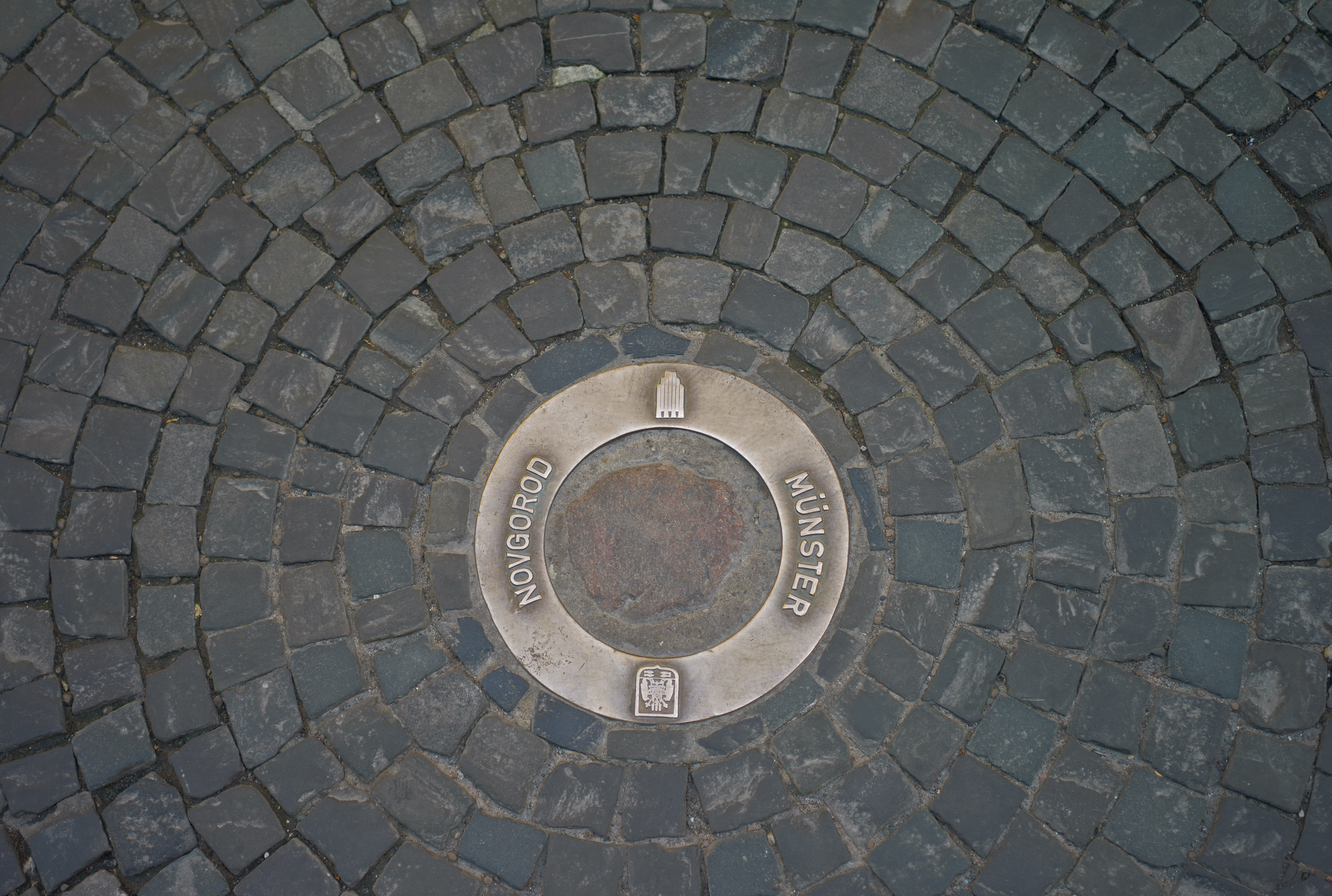
I have uploaded new pictures to Flickr. Here they are - unsorted and uncommented. Novgorod is actually Veliky Novgorod and is there because it was an important trading partner of the Hanseatic League - on the Salt Road in Münster, stones from various Hanseatic cities are embedded in the ground, with rings on which the origin is engraved.
spock - The Chicken Scheme wiki. If Dylan doesn't fit on JavaScript, how about Scheme? What's interesting here is the connection to Chicken Scheme - Chicken Scheme is one of the more interesting Scheme implementations in recent times that specifically focuses on integration into normal system environments (FFI and easy linking with C libraries), so this also lets us expect a bit from Spock in terms of JavaScript. And the documented functions already look quite good - not just a toy implementation, but apparently already a lot of functionality.
ralph. And if JavaScript under Flusspferd becomes too stupid for someone, they can simply install Ralph and then have a Dylan-like Lisp that compiles its function definitions to JavaScript. For whatever reason one would want that, maybe just because it's possible.
Flusspferd - CommonJS platform | Javascript bindings for C++. For those who want to play with JavaScript completely outside the client world, Flusspferd might be interesting. It is a REPL for JavaScript and various JavaScript libraries (which are oriented towards CommonJS).
PDP-11 emulator. In JavaScript. Runs Unix System 6. Yes, just like that, with disk access and all the well-known programs from back then. Because there aren't enough strange things already.
iPhone Location Data Again
Once again regarding the Apple response to the motion profile allegations and why Apple is right, but there is still a problem (but one that is significantly smaller than the dramatized problem in the press).
Apple produces a database with - anonymously collected, there are no indications so far that it is not anonymous - position data of iPhones with activated GPS, in which positions of networks are stored. Networks in this context are radio masts for GSM, 3G and WLANs that the iPhone sees at that time. However, this is not what is stored in the database that everyone is talking about. This is only the basis on which something is built that then ends up in the database.
The data sent to Apple is averaged internally and a "center" is determined for the networks reported by various iPhones (since the exact position of WLAN routers or radio masts is not simply provided - this must first be determined in some way). This data is stored in a large database at Apple. The position data therefore refers to the center of radio identifications. The original position data is only basic material for the determined position data.
The iPhone can now determine an approximate position via the visible radio identifications and their position information and a weighted average of the data based on transmission strength - but internet access is required for this. And internet access to the database at Apple. Therefore, the iPhone downloads the information about radio identifications and caches this locally. But of course not the entire database - that would be too much. Rather, a relevant excerpt determined by algorithms. This is now the database on the iPhone.
Apparently, Apple not only downloads the networks that the iPhone currently sees, but also neighboring networks - which makes sense, as the user moves around more often and the data from neighboring networks will be needed (potentially - the iPhone does not know in advance where I am going). Presumably, the iPhone will say "I see networks A, B, C" and the database will then provide "here are the networks A-M from the metropolitan area where you are located". The iPhone then takes X% of A, Y% of B and Z% of C as a basis and calculates a rough position and says "here I am". If it then moves into the visibility of network D, its position is already known and the iPhone can perform the position calculation directly without downloading.
In addition, the iPhone seems to store a temporal history of these downloads - presumably the developer assumed that if the user has been there before, there is a high chance that he will go there again. For this purpose, the iPhone keeps these data ready for one year. The claim by Apple that the duration of storage is a bug is certainly rather an embellishment - presumably a developer simply made up a duration and used it without considering how much would really be sensible - after all, these were not special data in his understanding. Only technical caches for downloads that he anyway makes when the user asks for his position.
What does this mean for the user? The data does not reproduce where he was in the coordinates - it only reproduces where the radio identifications are, in whose vicinity he was approximately. And since it also contains neighboring networks, this is really very approximate. Of course, a rough spatial profile of the user can be derived from this - for example, in my data I can indeed see that I have been in Amsterdam, in Frankfurt and in Berlin.
But for example, it also means in reverse that only the approximate regions are included if you also had network reception there, with download options. I was in Copenhagen - there I also had network access via the hotel, so traces of this are present. In Malmö and at the turn of the year in Russia I did not have network access - so GSM, but no internet access - and therefore the iPhone could not access these location data and could not download radio identifications with positions. Therefore, these data are also completely missing from my iPhone and there are no traces of Malmö, Ekaterinburg or Nischni Tagil (the same should apply if you have activated airplane mode or simply turn off WLAN and mobile data).
Furthermore, the spaces should become larger when you come to more rural regions - few WLANs, so mainly GSM cells and these with a larger range and more scattered. If you store a cell with the neighbors, this is already a fairly large area that is covered. In large cities, on the other hand, the covered area should be significantly smaller, simply because WLANs have significantly smaller ranges and there are more of them there. And radio cells there are also usually smaller (just because a cell can only cover a finite number of users, but the user density in cities is greater).
This is particularly interesting for programmers: do you think about what can be derived from cached data when you program? Take as a basis for consideration that someone has access to your DNS cache - which every system has internally, simply to reduce DNS queries. What picture of you as an image could this technically harmless information produce? These are the small pitfalls that programmers like to stumble over. It is actually harmless - auxiliary data that you get from the network is the beginning. Throwing away after use - well, if they are needed again, then it makes sense to have the most frequent ones ready, or? And it is exactly then that you run into problems like Apple currently has.
The discussion about why your browser cache contains porn pictures (because you read your mails with Outlook, for example, and opened a spam mail and had image display activated - not an outlandish situation!), if your wife finds them there, could already become quite interesting. The data no longer shows why they ended up where they ended up.
As stated in the title: I am referring here to the answer from Apple and have only checked this with my own data. My own data matches the information from Apple's statement and this statement itself is also consistent - both the contents and the specification of the use match quite well. I therefore see no reason why I should distrust the statement.
Apple's answer that the iPhone does not record the user's motion profile is therefore correct - it simply stores information for a position determination as an alternative to GPS. At the same time, however, it is at least a profile of the stay in large areas. Criticism is therefore quite appropriate. But in my opinion, it should be more intelligent than "Apple stores the user's positions in the last year", because this is simply wrong.
But as Apple says in the introduction to the answer: these are technical relationships that are more complicated than simply "does Apple store a motion profile Yes/No". And our press has massive problems with questions to which an answer contains more than two sentences. "Apple stores data from which the presence in large areas can be derived" does not sound so great and catchy as a headline.
Unfortunately, this very imprecise reporting can lead to problems arising - if I know that the data only covers regions where I have been, but not precise points of my stay, the explanation why my data from Frankfurt also includes the red light district (it's just near the train station) is much easier than if I have to assume that these are all places where I have been.
Apple must (and will, according to its own explanation) improve this - caching data for a year is nonsense. Backing up the data is also nonsense, they can simply be downloaded again if they are missing. Similarly, the data does not need to be stored if all location services are globally deactivated. It might also be generally interesting to have a switch "Pseudo-GPS Yes/No" or something like that, with which this type of position determination can be deactivated - then the user simply has to wait until the GPS satellites are logged in. Just as, in my opinion, the anonymous data collection for WLAN and radio masts should be switchable.
In my opinion, no cache should exist without a control function for this cache (just as you can also empty the browser cache). Because one thing must be clear: due to the general necessity of linking access time and loaded data (because only in this way can a cache with temporary storage function), every type of cache provides a kind of user profile. And this should be at least rudimentarily controllable by the user (in the sense of deleting). Setting up caches fundamentally with a clear function and a UI for this should become just as much a best practice as the encrypted storage of passwords on servers (hello Sony!).
Paper Airplanes HQ. Paper airplanes. That's all.
kiorky/spynner. Wow, that sounds really interesting - a programmatic (i.e., without a user interface) web browser based on QtWebkit as a Python extension. The advantage? Since a full web engine is underneath, you can use all the features of the web browser - for example, client-side JavaScript and all the other things used in web applications. This could be very interesting for automated testing of web applications - or for scraping more complex websites.
IgniteInteractiveStudio/SLSharp. Net - Write GLSL Shaders in C#, the IL code is then automatically loaded onto the GPU. High-Performance-Computing anyone?
IronScheme. Interesting - a Scheme for .NET. And unlike some dead projects I found, something seems to be happening here. Ok, I probably tend more towards IronPython, F# or if it's supposed to be Lisp, Clojure for .NET (there are now quite up-to-date binary packages to try out, unfortunately probably only Windows, at least it spits out errors under Mono).
F Sharp Programming - Wikibooks, open books for an open world. Seems to be a quite nice basic overview of F# - so especially for those who don't already have prior experience (e.g. from OCAML).
Tomtom apologizes for sharing data with radar traps. It's all quite funny in a way. On the one hand, the naivety of a data provider ("hey, they won't just use my data for something that might be embarrassing for us"), and on the other hand, the innovativeness of a government. (It is still unknown at this hour whether "experts" will run amok again and urge buyers of TomTom devices to sue the manufacturer or the Dutch state.)
Apple Q&A on Location Data. Will the experts who made some rather obscure claims now correct their statements? Or will there now be a great, embarrassing silence? Alternatively, I also have a nice conspiracy theory ready, that always works on the Internet.
Recently on Flickr





I have uploaded new pictures to Flickr. Here they are - unsorted and uncommented.
Home - Redline Smalltalk - Smalltalk for the Java Virtual Machine.. Not very far yet, but could become interesting at some point - and as an old Smalltalk fan, I naturally have to make a blog mark here.
Comics by Nick St. John. That's what it says. Just take a look. Simply and simply drawn, but in a peculiar way appealing to me (especially "How I Came to Work at the Wendy's").
Download Adobe Lens Profile Creator Preview - Adobe Labs. At the bottom of the page are download links. Once the mentioned Profile Creator, with which you can create your own profiles for cameras and lenses. But almost even more interesting is a Profile Downloader - with this you can download profiles from other Lightroom users. This can be useful if there is no profile from Adobe for your own combination yet. I also need to check if there is already a profile for the Zeiss C-Biogon (although it hardly needs one, it behaves so kindly when used).
Geotagging: Fotospot makes digital cameras GPS-capable. Rube Goldberg Geotagging. Honestly, people, if you actually need to carry around a local WLAN with a server to geotag your photos, then it doesn't matter if the server is shoved into the hot shoe of your camera - that's just silly. Just buy a camera that has on-board geotagging. Or a simple tip: with the iPhone and the built-in camera app (because of the metadata) just take a photo at every location, and then later transfer the geodata from these images to the others - there's already finished software for various systems that does this.
Serious PSN hack: Personal customer data copied. Now it's out why PSN was offline for so long (not that it affected me particularly - I don't have a PlayStation - but the silence around the downtime was quite strange).
Photosmith – The Grand Tour | Photosmith – the iPad mobile companion for Adobe Lightroom. Hmm - interesting approach. An app that syncs with Lightroom via a plugin and makes capturing metadata and rating photos on the iPad easier. However, I use a MacBook Air, which is already compact enough for the purpose - and has the advantage of a real keyboard (not necessarily wrong for metadata capture) and can run Lightroom directly. But for a vacation trip, it might be quite cool - import photos via CCK and then tag them there and transfer them later.
Lightroom Auto Sync: HOW to use it. Wow. I've been using Lightroom for a long time, but I didn't know that - you can enable automatic synchronization of settings, so that when you make changes to images in a series, you can jump between these images and make changes, but these are applied to all images. Very practical if you want a consistent look for a series of images, but you need to experiment with all the images to see what that look will be.
Piroggen (vegetarian, and not really Russian)
 Oh, that was quite a complicated task. Not because of the ingredients, that was rather simple. Nor was it difficult to prepare the filling, that was simple too. But then shaping and folding the pirogues and trying to get as much vegetable into these little beasts, that required some higher manual skill. Well, sometimes you have to tinker in the kitchen. By the way, these are not yeast dough pirogues - it's more like a kind of shortcrust pastry. The reason was that I thought it goes better with the filling. That was rather oriented towards a vegetable cake.
What goes in:
- 225g flour
- 145g margarine
- 1/2 tsp salt
- 2 eggs
- 3 small peppers
- a handful of black olives
- 1 vegetable onion
- a small bunch of spring onions
- a few cloves of garlic (to taste)
- basil and oregano, pepper, salt
- another egg for the assembly
The preparation then yourself (the individual parts):
- Knead flour, eggs, salt and margarine into a dough
- Let the dough disappear in the refrigerator for an hour
- Chop onions and garlic finely
- Cut peppers into small pieces
- Cut olives into small pieces
- Preheat oven to 200C
- Fry onions and garlic in the pan
- Add peppers to the pan, simmer for 5 minutes
- Add olives to the pan, season, simmer together for a few more minutes
- Cover the pan and push it to the back (it will cook a bit more)
- Separate the third egg into egg white and yolk
- Take the dough out of the refrigerator and roll it out
- Cut round pieces with a large cup (mine were about 10cm in diameter)
- Brush the edges with egg white (as glue)
- Put the vegetables in the middle of the dough circle and fold it half together, press the edges together
- Do this until the dough and/or vegetables are all gone
- Then brush the folded pirogues with egg yolk from above
- And bake the whole thing for 20 minutes at 200C
The folding was quite complicated. The dough must be quite thin, otherwise you have more dough than filling afterwards, which is rather stupid, so the dough is sensitive and folding and folding more complicated. And the dough should stay - mine rose, I did not glue the sides well enough (I read as a tip to press with a fork afterwards - unfortunately only when mine were already in the oven).
If possible, you should prepare the vegetables early and then wait for the dough in the refrigerator, then the vegetables are not so warm anymore - makes wrapping easier. And the filling can of course be changed freely - for example, one with minced meat is great, cabbage is classic, but other vegetables also work - everything just has to be cut small enough so that you can fold.
The plan for mods : The Word of Notch. This is how other game studios should handle mods. Don't sue the people who build on your game, but openly welcome them. Notch even releases the entire source code for mod developers.
tvON / python-wordpress. And to get posts and images into WordPress, I could work with this - a Python library that provides various WordPress functions. However, it comes in different versions, in different states of non-maintenance, so I have to go through it and see if everything runs as I want it to.
Backing Up Flickr. Because I just stumbled over it (I'm looking for ways to automatically push Flickr uploads to the WordPress media library, preferably from the server, without me always having to manually intervene. For this, I would actually have to marry this with WordPress functions (it is a Python script that backs up Flickr images to directories). The backup functionality works, by the way. Maybe not such a bad idea to back up your Flickr account from time to time ...
AWS Developer Forums: Life of our patients is at stake - I am ... - I hope this is a fake, but I fear it's actually true, that a company has been running life-critical monitoring systems for heart patients on EC2 without using multiple Availability Zones or having a failover plan ....
Real World Minecraft. Someone is building cardboard blocks in 1x1x1m according to the ideas from Minecraft and various other things around it and makes an installation out of it. Quite weird, isn't it? I wonder if the Creeper also explodes in real life?
Alex Levinson has some interesting comments on the "new" discovery of the collected geodata on the iPhone. Apart from the fact that it is not Apple that collects the data, but only the user's own device and computer, it is quite interesting that this "new" discovery was so well known that Alex has spoken about it at conferences and it was already described in his book on iPhone Forensics at the end of December 2010. A printed book. One of those made of paper. Something that researchers should actually read when they investigate things. So they don't make themselves look ridiculous when they write hyped articles about topics that have been known for a long time, without referring to previous research on the subject ...
Leica Summilux 35mm / 1.4 ASPH FLE. Does anyone have 3700 Euros to spare for me? Unfortunately, I don't, and that's how much this gem would cost me. I'll probably stick with my 700 Euro Zeiss C-Biogon 35/2.8, though I'm missing two stops of light intensity.
Münster declares its colors







In spring, colors explode in Münster - many cherry trees, rhododendron bushes, and magnolia trees in public areas and in front gardens (yes, in Münster many townhouses still have front gardens with real plants instead of concrete slabs!), even basement windows directly on the sidewalk get a few flowers. In winter, one almost forgets how beautiful the city can be. The title is derived from a regular planting action by the city gardeners - and can also be found as a planted area on the promenade at Aegidii-Straße.

Zwinger in Münster

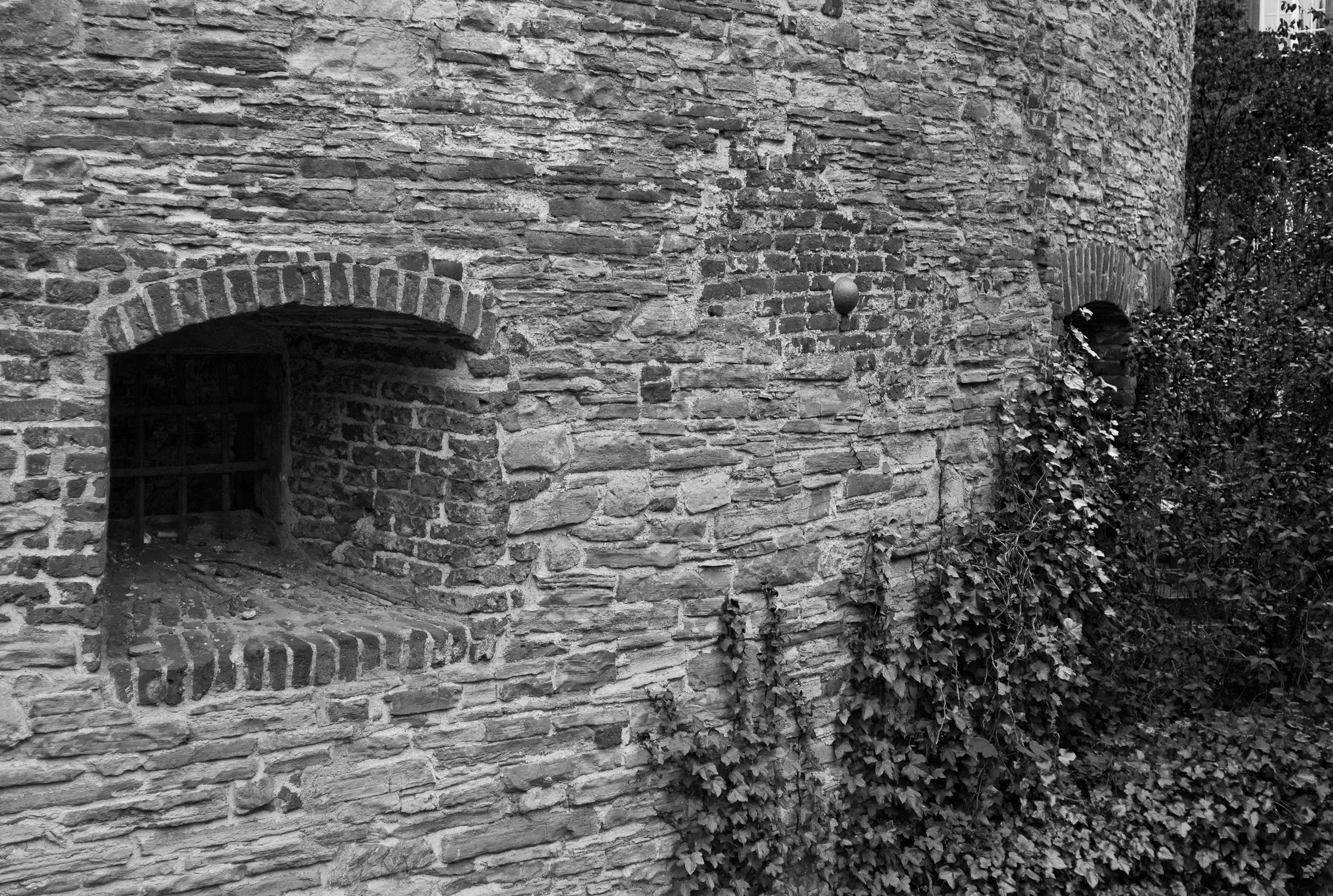

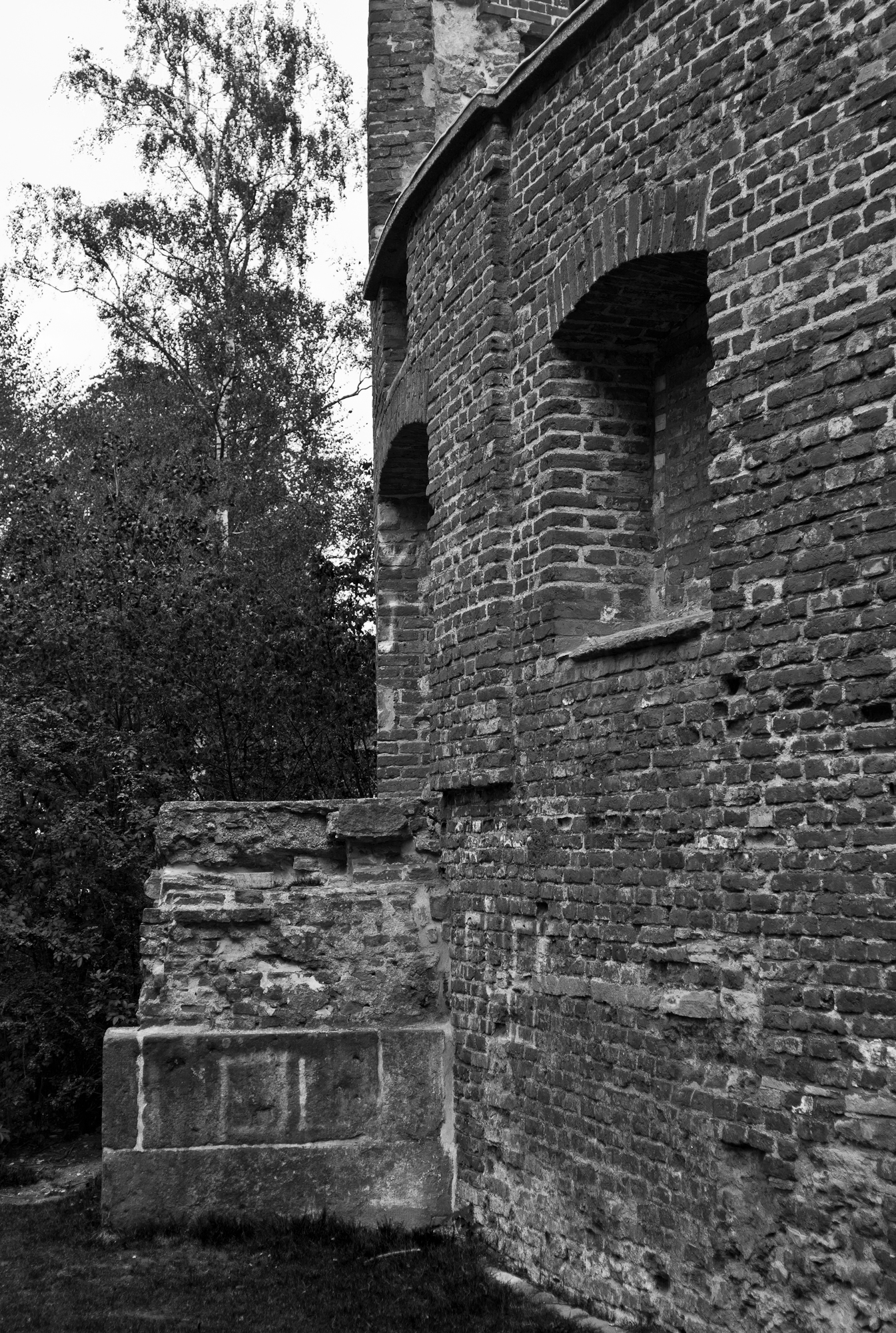
The Zwinger in Münster is an old gun turret from the early 16th century, which, among other things, was used as a prison and execution site by the Gestapo during World War II. Today, it is part of the city museum. The Zwingerbezwingerin is a Ganesha statue in the garden of a house on the other side of the Promenade, opposite the Zwinger.
Patent lawsuit: Google convicted in first instance over Linux servers. Just when we thought patent nonsense couldn't get any worse, here's the latest example of how absurd patents on algorithms and data structures are. Especially when such cases are tried before juries, as if patent infringements were something that could be judged by the "public conscience."
Kodak DC20 Data Sheet. My first digital camera. It was somehow funny. The Wayback Machine has archived my old homepage, on which I made a photo gallery from Münster with the camera.
The Düsseldorf district government defines prohibited entertainment as an event that "is intended to provide pleasant pastimes, sociability, as well as relaxation and recreation". Exceptions may be allowed for religious or solemn events.
via Discussion about Good Friday rest. So much for the topic of secularization.
Gondor — effortless production Django hosting. Hmm, that sounds quite interesting - a tool for easier deployment including database migrations (via South). As far as I understand, it is tied to their infrastructure - so rather an alternative to Google AppEngine, directly based on Python.
Kodak 760m Review. And another camera exotic: the Kodak without anti-aliasing and without Bayer filter. So raw black and white, directly from the chip. I would wish one could order his cameras today without Bayer - because black and white is just fun.
Minolta Dimage RD3000 Digital Camera Review: Intro and Highlights. Because we talked about it in the office today - one of the most interesting camera systems that never caught on. So to speak, the precursor to what is today Micro 4/3, or the Sony NEX system represents. And namely a digital SLR for the Minolta APS SLR system.
Broadway update 3 « Alexander Larsson. No idea how I will use this or for what, but I want to! Run GTK+ applications as a client-server app with the interface in the browser - and Gimp already does it. Crazy.
Rating agency questions US creditworthiness. Maybe these mysterious rating agencies will become history if they take on the USA. Because one thing is clear: as soon as the free market economy, so propagated by the USA, hits the USA itself, they are terribly sensitive. As long as the rating agencies only drive unimportant (from the USA's perspective) European states to the brink of the abyss, it's completely irrelevant.
Snooping: It's not a crime, it's a feature. The great new photo network Color? It turns on your microphone to have another clue about location based on sounds. Did you expect that a photo-sharing app for the iPhone would eavesdrop as well, or?
Jess, the Rule Engine for the Java Platform. If you ever need a rules engine for Java, Jess is based on the core ideas of CLIPS, which has existed for quite some time now (around the mid-80s), but integrates into the Java world. An alternative would be Hamurabi, a rules engine written in Scala that features an integrated DSL with Scala language tools.